
I’m Dave Weatherford, owner and estimator at Proper Painters, and I’ve been in the painting business since 2022, completing 225+ projects along the way. I enjoy sharing the practical lessons I’ve picked up on real jobs, from prep work to the finishing touches, in a way that’s fun, straightforward, and actually useful for homeowners.
How many coats of paint for a ceiling? Usually two, but the real answer depends on what that ceiling has been through. A sound ceiling getting the same white can sometimes take a single quality coat. One with repaired cracks needs those spots primed first, then two coats so the repairs disappear. A ceiling stripped of popcorn texture is bare drywall, so it gets a full coat of primer and two finish coats.
Water stains need a stain-blocking primer before any of that. Below are three ceilings from our own interior painting jobs around Richmond, each needing a different count. Chances are yours looks like one of them.
How We Decide: Start With the Ceiling’s History
When I’m standing in a living room working out how many coats of paint for a ceiling, I’m not really looking at the paint. I’m asking what the surface has been through since it was last painted. Three questions get me to the number:
- Has anything been repaired? Patched cracks and fresh mud soak up paint differently from the old finish around them. Those spots get primed before anything else.
- Is any of it bare? Raw drywall paper and joint compound, like you get after popcorn comes down, need a full coat of primer.
- Is the color staying the same? Same white over a sound surface can be a one-coat job. Anything else is two.
A yes to either of the first two means primer, at least on those spots, plus two coats. A no to both, with the color staying the same, is where one coat becomes possible.
The Tired Ceiling That Just Needed a Refresh
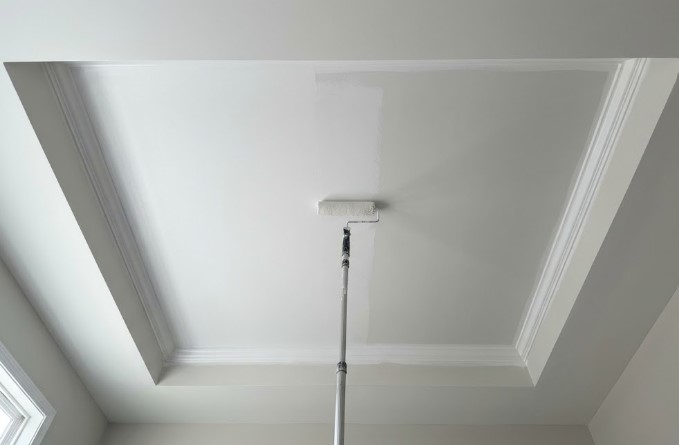
Plenty of the ceilings we paint fall into this group. Nothing’s wrong with them; they’ve just gone dull, dingy or a little yellow over the years. If the old paint is sound, there are no repairs, and the homeowner is keeping the same white, I’ll say up front that one good coat of ceiling paint may be all it needs. That’s a day of labor you don’t need to pay for.
How We Paint Over a Patched Ceiling
“I needed multiple plaster cracks in ceilings & walls repaired and everything repainted,” Kathie L. wrote about her 1960s rancher. That’s the kind of job where painting over a patched ceiling goes wrong if you rush it.
The cracks come first. Plaster cracks need more than caulk: they get opened up, filled with a setting compound and sanded flat.
But a filled crack is still a different surface from the ceiling around it. Compound is far more absorbent than the old paint, so a finish coat rolled straight over it dries duller in those spots. It’s called flashing, and on a ceiling with a dozen repairs it looks like a map of every crack you just fixed.
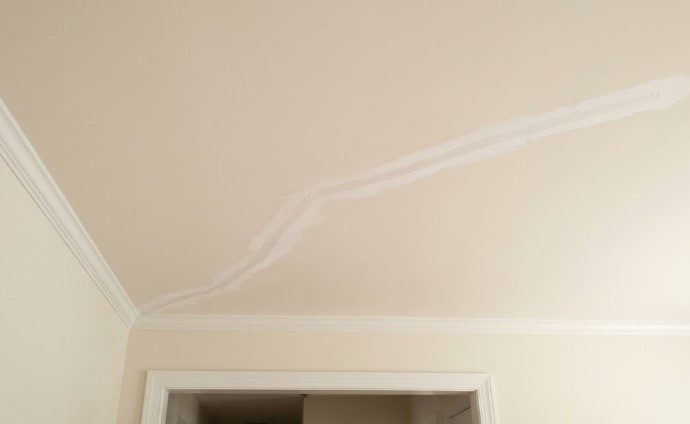
So every patch gets spot-primed, then the whole ceiling gets two coats. On Kathie’s house that meant Sherwin-Williams Multi-Purpose Latex Primer on each repair, followed by two coats of Sherwin-Williams Eminence High Performance Ceiling Paint.
How We Paint a Ceiling After Popcorn Removal
Once the texture comes down, what’s left isn’t a painted ceiling anymore. It’s gray drywall paper, taped seams and patches of joint compound, all soaking up paint at different rates. Painting a ceiling after popcorn removal is the closest thing to painting new construction, so it’s never a one-coat job.
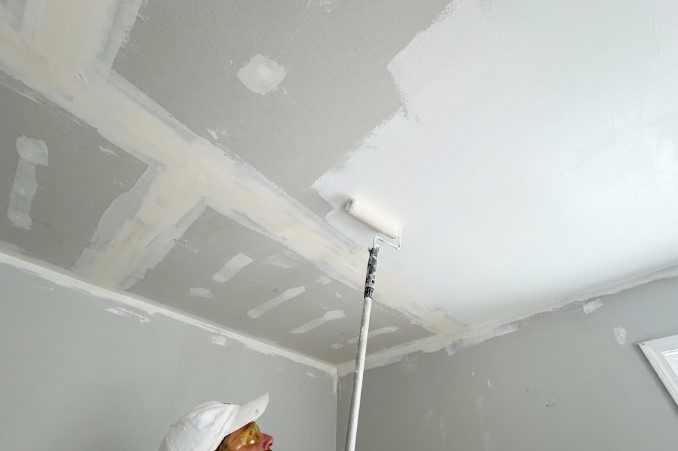
One caution if your home is older: popcorn and acoustic ceilings put up before the mid-1980s can contain asbestos. Before anyone scrapes one, have a sample tested by a certified lab. If it comes back positive, removal is a job for a licensed abatement contractor, not a paint crew.
Stains and Color Changes
A brown ring from an old roof or plumbing leak is the one thing extra coats can’t solve. Water stains, along with smoke and nicotine, are soluble: they work their way up through ordinary latex paint and reappear, sometimes within days. They need a stain-blocking primer first, and only once the leak is fixed and the drywall is dry.
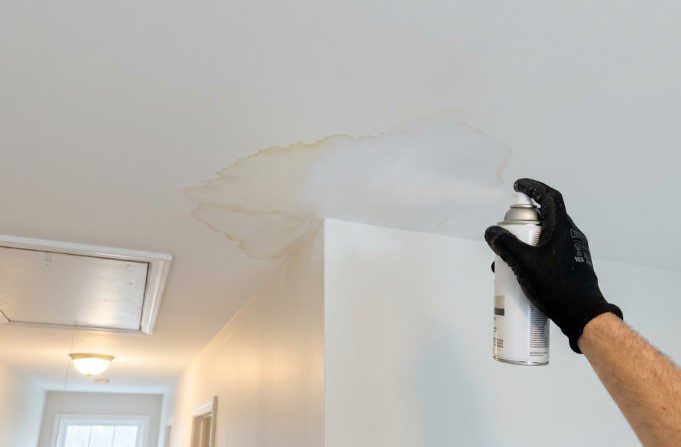
Color is the other exception. A ceiling going from a color back to white, or from white to a deep shade, needs primer and two coats so the old color doesn’t ghost through.
Why Ceilings Look Patchy, and How We Prevent It
A ceiling can have the right number of coats and still look blotchy, because of where the light comes from. Sunlight through a window grazes the ceiling almost sideways, so any ridge, thin spot or overlap casts a faint shadow that a wall would never show.
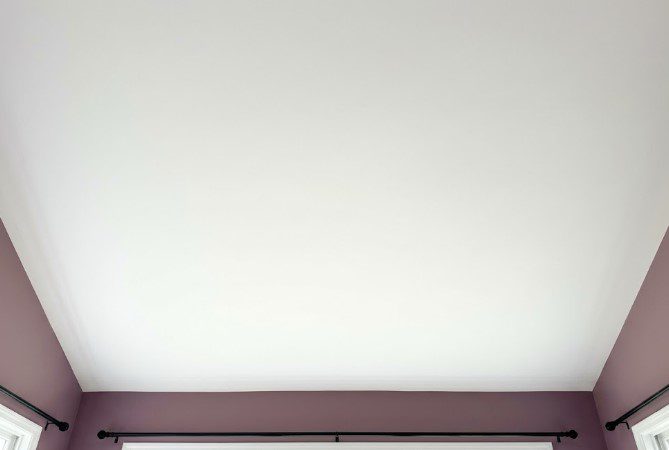
Our crews handle it with a few habits:
- Cut in the edges first, then roll while that band is still wet, so there’s no frame around the room.
- Load the roller fully and keep a wet edge, so each pass blends into the last instead of stacking on dried paint.
- Make the last passes run toward the main window, so roller lines follow the light rather than cross it.
- Use a flat ceiling paint, since any sheen makes every pass visible.
Questions We Hear About Ceilings
Should the ceiling be painted before the walls?
Yes. Ceiling work throws off a fine mist and the odd drip, so it’s better done first while the walls still need painting. It also lets us cut the walls in sharply against a finished ceiling line.
How long between coats on a ceiling?
Follow the recoat time on the can, and allow more on a humid Richmond summer day, when paint dries slower. A second coat rolled over a tacky first one lifts it and leaves rough, uneven patches.
Is ceiling paint different from wall paint?
Yes. Ceiling paint is flat, thicker and made to spatter less, and the flat finish hides the lap marks that side light shows on a ceiling.
Can I paint a ceiling the same color as the walls?
You can, and it works well in rooms with low ceilings or lots of trim. Use a flat version of the wall color so the ceiling doesn’t pick up glare.
Do you need to prime a ceiling that has never been painted?
Yes. Bare drywall and joint compound soak up paint unevenly, so a primer coat comes first, then two finish coats.
Let Us Count the Coats for You
We’ll look up, tell you honestly whether your ceiling needs one coat, two, or primer first, and put it in writing. Ask for a free estimate, and if you’re changing colors while we’re at it, Beth’s color consultation is free. Every job is backed by our Results Guarantee and warranty.